Does Kentucky Weather Affect Countertop Installation

In an unheated garage in January, seam work on a Lexington, KY countertop takes longer than the schedule says, and the notes at countertops lexington book js on timing start with that fact. Epoxy and silicone cure slowly when the room is cold, so a seam that would set in a few hours in May can sit tacky well into the next day. Weather changes the order of the job, not just the comfort of the crew.
Cold slabs and cold adhesive
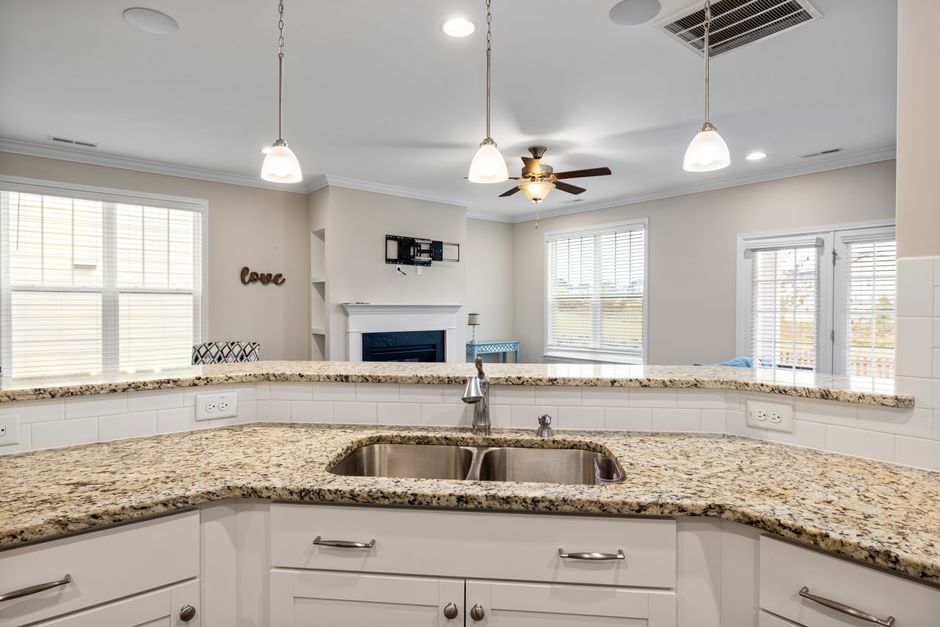
A granite or quartz slab stored outside in freezing weather should come inside and reach room temperature before any adhesive work. Cold stone pulls heat out of the glue line and slows the cure. Seam epoxy behaves the same way in a cold kitchen with the furnace off. Warm the room, warm the slab, then mix.
Humidity and silicone

Very high humidity can slow the cure of some silicone sealants and adhesives. A muggy week in Fayette County in July is not the day to rush a sink cutout bead or a backsplash joint. Give it the time on the cartridge and then some, and keep water off it until it has skinned and set.
Butcher block moves with the seasons
Wood butcher block expands and shrinks across the grain as indoor humidity swings between humid summers and dry heated winters. Stone does not need this allowance, but wood does. A top glued down tight in every direction will crack or cup. Fasten it through slotted holes, or use hardware that lets the top slide a little, and leave the movement room the wood will ask for.
Finish all sides of wood
Oil or finish a wood top on every face, including the underside and the cutout edges. If only the top is sealed, the bare face takes on moisture faster and the board bows toward the dry side. Even finishing lets the moisture move in and out evenly. Do this before the top is set, since the underside is out of reach afterward.
Sealer, cure time and first use
Granite sealers need a dry surface and a set cure time before the counter gets wet. After rain or a wet mop, wait until the stone is dry through. Near a fresh seam, heavy loads and hard use should wait until the installer says the adhesive has cured, often at least overnight. That means no stacked boxes, no mixer on the edge, and no leaning on an overhang. Plan templating and install days around the forecast and the heat in the house, and the seam will stay tight.